Business Valuation
A Practical Guide for Owners
BuiltValue Editorial Team
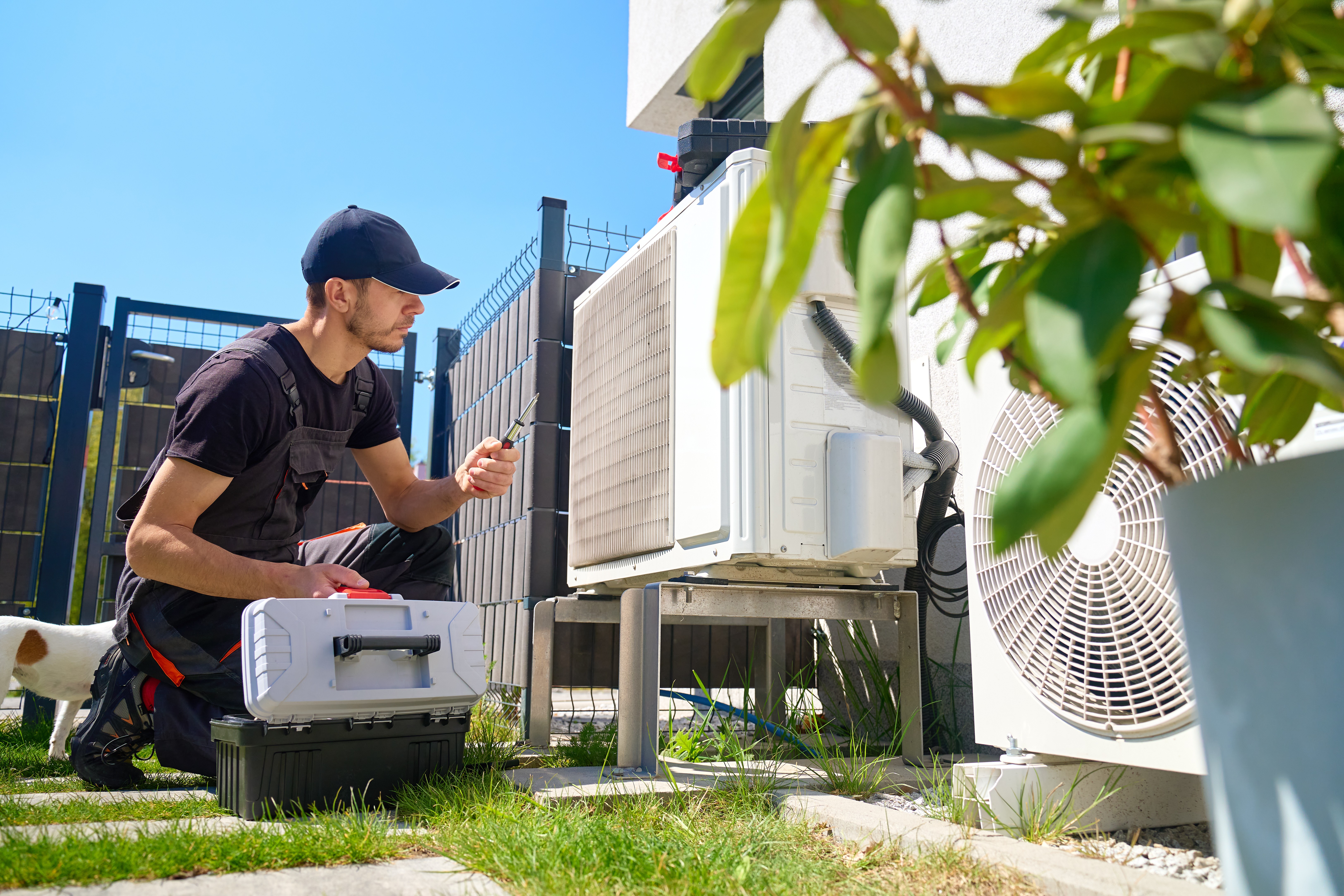
If you’ve spent years building an HVAC business, you’ve probably wondered what someone would actually pay to buy it.
Maybe you’re considering retirement. Maybe a competitor has approached you about selling. Or perhaps you simply want to know whether the business you’ve built could become a valuable asset someday.
The answer depends on more than annual revenue.
For many smaller HVAC businesses, buyers start with annual owner earnings and apply a valuation multiple. But profitability, recurring service agreements, employee stability, and how much the company depends on its owner can all affect the final price.
This guide explains how HVAC businesses are valued, what recent sales data tells us, and how to estimate your company’s potential value.
How much do HVAC businesses sell for?
According to BizBuySell’s reported U.S. HVAC business sales from 2021 through 2025:
Valuation benchmark | Reported result |
|---|---|
Median earnings multiple | 2.58× |
Middle 50% of earnings multiples | 1.99×–3.33× |
Median reported sale price | $750,000 |
Median annual owner earnings | $304,309 |
Source: BizBuySell HVAC Business Valuation Benchmarks.
These figures describe businesses sold and reported to BizBuySell. They are not a complete record of every HVAC acquisition, and they shouldn’t be treated as a guaranteed price range for an individual company.
A well-run HVAC company with stable earnings, strong management, and recurring maintenance revenue may attract a higher multiple. A company heavily dependent on its owner or a few customers may attract a lower one.
The basic HVAC business valuation formula
For smaller, owner-operated businesses, a common starting point is:
Estimated Business Value = Seller’s Discretionary Earnings (SDE) × Valuation Multiple
Let’s say your HVAC company generates $250,000 in annual SDE.
Here’s how different multiples change the estimate:
Valuation scenario | Multiple | Estimated value |
|---|---|---|
Conservative | 2.0× | $500,000 |
Middle | 2.6× | $650,000 |
Higher | 3.3× | $825,000 |
These are illustrative calculations, not offers or appraisals. The eventual purchase price and proceeds to the seller can differ because of debt, cash, working capital, included assets, deal structure, taxes, and transaction costs.
The important takeaway is that the same business earnings can support very different valuations depending on the quality and transferability of the business.
What is Seller’s Discretionary Earnings (SDE)?
Seller’s Discretionary Earnings is a measure of the financial benefit available to one working owner before certain expenses.
For smaller businesses, it can help buyers compare companies whose owners pay themselves differently or run different discretionary expenses through the business.
A simplified calculation starts with reported profit and adjusts for eligible items such as:
One owner’s compensation and benefits
Interest expense
Income taxes
Depreciation and amortization
Documented, genuinely nonrecurring expenses
Certain discretionary expenses that a buyer would not need to continue
Not every expense qualifies as an add-back. Buyers typically expect documentation and may challenge expenses that are necessary to operate the company.
Example: Calculating HVAC business SDE
Suppose an HVAC business reports:
Item | Amount |
|---|---|
Net income | $120,000 |
One owner’s salary | $85,000 |
Interest expense | $10,000 |
Depreciation | $15,000 |
Documented one-time expense | $20,000 |
Illustrative SDE | $250,000 |
This assumes the amounts are not double-counted, the add-backs are appropriate, and the reported net income is measured consistently.
A buyer will want to verify these figures against financial statements, tax returns, payroll records, and supporting documents.
Before estimating what your HVAC business is worth, make sure you understand its actual SDE.
What makes an HVAC business more valuable?
Two HVAC businesses with identical earnings can sell for different amounts.
Here are six factors that can influence what a buyer is willing to pay.
Recurring maintenance agreements
Predictable revenue and customer relationships.
Limited owner dependence
A business that can run without you.
Clean financial records
Clear, reliable financial statements and tax returns.
Strong team
Experienced, licensed technicians who will stay.
Diversified customers
Balanced residential, commercial, and service revenue.
Consistent profitability
Strong, sustainable margins over time.
1. Recurring maintenance agreements
A business with a healthy base of active maintenance agreements may be more attractive than one relying entirely on one-time installation jobs.
Buyers may value the predictability of recurring service revenue, opportunities for future repairs, and existing customer relationships.
Track how many agreements you have, how often customers renew, and how profitable those agreements actually are.
2. Limited owner dependence
Can your HVAC business run for two weeks without you?
If you personally handle every estimate, customer complaint, scheduling decision, and major repair, a buyer may see operational risk.
A business with trained technicians, a capable service manager, documented processes, and reliable office support can be easier to transfer to a new owner.
3. Clean, reliable financial records
Buyers want to understand where revenue comes from and how much profit the company consistently produces.
Useful records include:
Three years of financial statements and tax returns
Monthly revenue and profit reports
Payroll and technician labor costs
Service versus installation revenue
Maintenance agreement performance
Vehicle, equipment, and debt schedules
Clear financial records can reduce uncertainty during due diligence.
4. A strong team that will stay
Experienced, licensed, and dependable technicians are important to an HVAC company’s ability to continue serving customers.
Buyers may examine employee turnover, compensation, licensing requirements, and whether key people are likely to remain after a sale.
5. Diversified customers and revenue
A company that depends on one commercial account or a single referral partner can be riskier than one with a broad customer base.
Residential service, maintenance agreements, commercial contracts, replacements, and installation work may provide different revenue opportunities.
What matters is the profitability, stability, and concentration of those revenue streams—not simply having as many as possible.
6. Consistent profitability
Revenue growth is helpful, but buyers generally care about whether the business converts sales into sustainable earnings.
A company with $2 million in revenue and weak margins may be less attractive than a smaller company producing stronger, more reliable cash flow.
Is an HVAC business worth a percentage of revenue?
Revenue multiples can provide a secondary comparison, but they don’t tell the whole story.
BizBuySell’s reported HVAC sales from 2021 through 2025 had a median sale-price-to-revenue multiple of approximately 0.56×.
However, a revenue-based estimate can be misleading when two businesses have very different profit margins.
For example, two companies might each generate $1 million in annual revenue, but one produces $100,000 in owner earnings while the other produces $250,000.
Their economic value to a buyer is unlikely to be identical.
That’s why SDE is often a more useful starting point for smaller HVAC companies.
How can you increase your HVAC business’s value before selling?
If you’re considering a sale in the next one to five years, you may have time to improve both earnings and buyer confidence.
Start with these five priorities:
1. Understand your current SDE. Build a defensible earnings calculation using your actual financial records.
2. Strengthen recurring revenue. Review maintenance agreements, customer retention, and service profitability.
3. Reduce dependence on yourself. Delegate key responsibilities, train team members, and document recurring processes.
4. Clean up financial reporting. Separate personal expenses, reconcile accounts, and organize historical records.
5. Prepare for buyer due diligence. Keep licenses, contracts, employee information, equipment records, and financial documentation organized.
You don’t need to be ready to sell tomorrow to benefit from these improvements.
A more organized, profitable, transferable company can be valuable to you even if you decide to keep operating it.
What if you aren’t ready to sell yet?
You don’t have to hire a business broker or commission a formal valuation just to begin understanding your company’s potential value.
A useful first step is to build three valuation scenarios using your SDE, identify the factors that could affect your multiple, and prioritize improvements that would matter to a future buyer.
That’s what BuiltValue is designed to help you do.
Understand your numbers before you make your next move
The BuiltValue Service Business Value & Exit Kit helps service-business owners:
Calculate estimated Seller’s Discretionary Earnings
Explore conservative, middle, and higher valuation scenarios
Identify opportunities to improve business value
Organize information buyers may request
Plan ahead for a potential sale
Get the BuiltValue Kit — $49
Explore the BuiltValue Toolkit
Frequently asked questions
How much is a $1 million HVAC business worth?
Revenue alone isn’t enough to determine value. A company generating $1 million in annual sales could have very different earnings depending on labor costs, pricing, overhead, and service mix. Calculate SDE first, then compare appropriate sold-business multiples.
What multiple do HVAC businesses sell for?
BizBuySell’s reported HVAC transactions from 2021 through 2025 had a median earnings multiple of 2.58× SDE, with the middle 50% ranging from 1.99× to 3.33×. Individual transactions may fall outside that range.
Can an HVAC business sell for more than 3× earnings?
Yes. Some businesses sell above that level, depending on their size, profitability, management, recurring revenue, competitive position, and buyer demand. Larger professionally managed companies may also be evaluated using EBITDA rather than SDE.
Does the owner need to stay after selling?
Not always. The buyer and seller may negotiate a transition period, consulting arrangement, or continued employment. The business’s ability to operate without the current owner can influence its attractiveness.
Should I get a professional valuation?
If you’re actively preparing for a transaction, negotiating with a buyer, resolving an ownership dispute, or making a major financial decision, a qualified valuation professional and appropriate legal and tax advisers can provide more transaction-specific guidance.
Sources: BizBuySell HVAC Valuation Benchmarks (reported 2021–2025 U.S. transactions); BizBuySell Insight Report
Disclaimer: BuiltValue provides educational tools and planning resources, not certified business valuations, appraisals, brokerage services, or legal, tax, accounting, or financial advice. Estimates are illustrative and actual transaction outcomes vary.
Get the complete toolkit
The BuiltValue Service Business Value & Exit Kit gives you templates, calculators, and checklists to understand and increase the value of your business.
Have a question?
We’re happy to help. Reach out at support@getbuiltvalue.com.

Calculate your SDE, explore valuation scenarios, and get a step-by-step plan to increase your business value.
Get the Kit Now